Sunday, June 22, 2025

A Six-Month Reckoning: Trump’s Presidential Recklessness Exposed


A Six-Month Reckoning: Trump’s Presidential Recklessness Exposed


Introduction

Over the last six months, Donald Trump’s presidency has been defined by a stunning series of reckless actions, leaving domestic norms, international relationships, and democratic values reeling in their wake. From aggressive executive orders and legal overreach to a contentious foreign policy punctuated by open conflict, this report delivers a thorough, evidence-based examination of Trump’s most alarming behavior as president during this period.

Escalation to War: Declaring Hostilities on Iran

One of the gravest episodes came when Trump unilaterally declared war on Iran. The administration bypassed congressional authorization, launching a series of targeted strikes and triggering an international crisis. This decision fractured alliances, drew global condemnation, and placed American service members and civilians abroad in immediate danger. Domestically, it sparked rare bipartisan outrage, legal battles, and a deepening rift between the executive branch and Congress. The absence of clear national security justification and the dismissiveness toward checks and balances left many questioning both the legality and wisdom of the action.

Aggressive Immigration Enforcement

Trump intensified a hardline approach to immigration, ordering mass deportations with a particular emphasis on Democrat-led “sanctuary cities.” Sweeping ICE raids, family separations, and overcrowded, unsafe detention facilities became commonplace. Congressional oversight was restrained—now requiring advance notice for facility visits, and often being blocked outright. Despite administration claims, the vast majority of detainees lacked serious criminal records, fueling public protests and constitutional challenges and amplifying trauma within immigrant communities.

Erosion of Checks and Balances

Throughout the past six months, Trump repeatedly bypassed congressional authority, not just with military actions but with suspended habeas corpus for detainees and a pattern of ignoring court rulings. High-profile legal battles emerged as the administration claimed powers typically reserved for the legislative branch. Genuine oversight suffered as both courts and Congress struggled to assert their roles, threatening lasting harm to the fundamentals of American governance.

Abuse of Executive Orders and Overreach

With a record number of executive orders—157 in under five months—Trump wielded presidential authority as a blunt instrument for policy, publicity, and personal advantage. Many directives, such as efforts to end birthright citizenship and dismantle diversity programs, were immediately challenged in federal court. Critics described these orders as more about eroding legal norms or distracting from controversies than enacting viable policy, and several were ultimately ruled unconstitutional.

Financial Conflicts, Pay-to-Play, and Self-Dealing

Trump reached new levels in conflating public duty and personal financial gain. His family’s real estate and cryptocurrency ventures flourished with increased foreign investment—often from Gulf states—coinciding with official state visits and policy shifts. Notably, exclusive dinners promising White House access in exchange for investing in Trump-associated crypto tokens prompted heated investigations and bipartisan calls for impeachment. Profuse conflicts of interest and regulatory loopholes benefited Trump’s own partners while reducing transparency across government.

Humanitarian and Social Consequences

The administration’s crumbling of immigration protections led to shocking conditions for detainees—chronic overcrowding, lack of medical care, and rampant rights abuses, often in for-profit facilities. Free press and civic oversight were severely retrenched. Rollbacks in diversity and inclusion policies targeted minorities and LGBTQ+ individuals, heightening both economic disparity and social strife. The overall result was a society ever more divided along lines of race, identity, and citizenship.

Delegitimizing Institutions and Norms

Trump’s open attacks on the independence of the judiciary and his dismissal of congressional authority led to an erosion of public trust in foundational institutions. The Department of Justice, in particular, was politicized, serving as a shield for allies while the administration publicly challenged the legitimacy of judges, laws, and congressional investigations. These actions undermined the system of checks and balances on which the republic relies.

Media Manipulation and Public Messaging

Carefully curated narratives—reinforced by a loyal cabinet and echo chambers like Fox News—amplified the administration’s decisions, fueling polarization. The White House targeted hostile journalists, limited press access, and worked to spin controversies in favor of Trump’s agenda at every turn, deepening divisions across American society.

Crackdown on Dissent and Activism

Under Trump, dissent was not simply discouraged—it was aggressively penalized. Activists experienced government scrutiny, legal intimidation, deportations, and roadblocks, especially if they were international students or those affiliated with protest organizations. Key nonprofit funding channels were curtailed, and executive orders sought to punish protest-related organizations. The result was a chilling effect throughout civil society.

Militarization and Domestic Instability

Perhaps most alarmingly, military resources were deployed domestically to quash civilian protests, in open defiance of the Posse Comitatus Act. State National Guard units were federalized to override governors’ objections, setting alarming precedents for federal intervention in state affairs and fueling further unrest. These heavy-handed responses to civil disobedience contributed to a climate of fear and instability across the country.

Global Economic and Security Risks

Trump’s go-it-alone economic policies, such as steep tariffs on China and impulsive trade maneuvers, introduced major volatility into global markets. Alliances were weakened, multilateral diplomacy suffered, and the United States’ world standing further eroded as the administration prioritized short-term advantage and personal gain over stability. The recklessness on the international stage, including the Iran conflict, cast a long shadow over global security and prosperity.

Conclusion

The last six months of Donald Trump’s presidency, marked by wars declared without oversight, personal enrichment, attacks on dissent, and a disregard for democratic norms, have left deep scars on the nation’s civic fabric and its role in the global community. The impact—legal, humanitarian, psychological—will be felt long after these headlines have faded, and serve as a lasting warning of the dangers posed by unchecked executive power.

Friday, June 20, 2025

Communication Strategies

Trump's Communication Strategies: Non-Answers, Topic Shifts, and Confrontation with the Media

Introduction

Donald Trump's presidency was marked by a unique communication style that often frustrated reporters, delighted supporters, and dominated the media cycle. Central to his approach were three interrelated strategies: offering non-answers, abruptly shifting topics, and confronting the media directly—sometimes with unmistakable anger or derision. These tactics, while not entirely new in political discourse, became hallmarks of Trump’s way of navigating tough questions and shaping public perception.

The Power of the Non-Answer

One of Trump’s most recognizable communication strategies was the artful non-answer. Rather than address a reporter’s question directly, he frequently responded with ambiguity, broad generalities, or vague timelines. Phrases like "we’ll have an answer in two weeks" became so common that reporters and satirists took note and even parodied these recurring delays.

These non-answers allowed Trump to maintain flexibility, avoid confrontation on policy specifics, and deny the media the clarity they sought. Particularly when asked about complex or controversial policies—healthcare reform, tax plans, or diplomatic moves—he set vague deadlines that often passed without any substantive follow-up. Critics argued that this created a "cycle of non-fulfillment," eroding public trust and contributing to skepticism about the administration’s intentions.

Changing the Topic: A Skillful Redirection

When faced with persistent questioning, Trump would frequently pivot away from unwelcome subjects. Redirection could involve bringing up unrelated topics—often highlighting his administration’s achievements or criticizing perceived opponents. This deflection served to shift the conversation away from uncomfortable areas, disrupt the reporter’s momentum, and recast the narrative in a more favorable or combative light.

Such topic shifts rarely went unnoticed. Journalists would attempt to draw Trump back to the original question, often resulting in a circular exchange where clarity was intentionally avoided. Over time, this became a predictable feature of White House briefings, leading to growing media frustration.

Yelling at and Confronting the Media

Adding a layer of intensity, Trump frequently engaged the press with outward displays of anger, scorn, or direct accusations. Whether through sharp words—telling a reporter they were "not a good reporter"—or in louder, more performative outbursts, these confrontations often became headline moments. While direct insults or name-calling were less systematically documented, media analysts characterized his tone as aggressive and, at times, bullying.

Trump’s confrontational stance had a dual effect. For supporters, it epitomized a leader unwilling to back down from hostile coverage; for detractors, it appeared as an attack on the press and democratic accountability. By making the media itself a story, Trump distracted from substantive inquiries while galvanizing his base against "fake news."

The Media’s Response and the Implications

The media frequently called out these tactics, from mocking the endless "two-week" delays to highlighting the avoidance of concrete answers. Some news outlets critiqued their own role in amplifying topic shifts and ambiguous statements by treating every vague promise as breaking news. Commentators like Jen Psaki have specifically highlighted the need for journalists to challenge these evasions and not enable cycles of strategic ambiguity.

Despite media pushback, Trump’s approach successfully kept him at the center of attention and often left reporters playing catch-up. These strategies were not without cost, as public trust in both the media and the White House suffered. Still, Trump’s pattern of non-answers, topic changes, and confrontational theatrics reshaped the relationship between a president and the media in ways likely to influence political communication for years to come.

Conclusion: The Legacy of Strategic Evasion

Trump's communication style, typified by non-answers, topic shifts, and confrontational exchanges, represents a deliberate strategy—one designed to exert control, maintain flexibility, and rally supporters. However, such methods have also seeded deeper mistrust and cynicism around political messaging. The ongoing debate about their effectiveness, both as political tactics and as tools of governance, remains one of the enduring legacies of the Trump presidency.

TACO: Trump Always Chickens Out – The Fine Art of Dodging Questions


TACO: Trump Always Chickens Out – The Fine Art of Dodging Questions

When I stumbled onto the “TACO” theory—Trump Always Chickens Out—I realized political theater is, at its heart, a game of dodges and feints. Every time Trump sidesteps a difficult media question, some say it’s more than bluster. It’s strategy. But is it just him buying time, or is there something tastier behind the act?

Picture this: reporters toss out tough questions like confetti, the cameras flashing, the pressure building. In response, Trump slides into familiar territory—a sudden topic change, a boast, or even feigned outrage. His base? They love the show. The media? Left chasing a moving target. It’s as if, instead of biting into the hot sauce of accountability, he reaches for a much safer, softer taco shell, slyly escaping the heat.

This habit, some critics point out, lets him keep his supporters engaged. Avoiding direct answers isn’t just evasion—it’s a way of controlling the narrative and keeping everyone a step behind. And, in some not-so-secret circles, that’s where the “TACO” joke comes into play. Trump, Always Chickening Out, swaps spicy truth for comfort food, at least metaphorically.

Do I find it incredibly cunning, or just reheated leftovers from political playbooks gone by? Maybe both. But as much as I like to laugh at a clever acronym, the real lesson here is that dodging a question isn’t just about escaping scrutiny—sometimes, it’s about deciding what kind of meal you’re serving your supporters. Deliciously evasive, or just a little bland? Either way, everyone’s left hungry for more.

Tuesday, June 17, 2025

Trump’s New Violations, Profits, and Citizen Power


Trump’s New Violations, Profits, and Citizen Power: What’s Happened Since November 2024


Introduction

Since November 6, 2024, the political landscape in the United States has seen a series of controversial acts by former and current President Donald Trump. Legal experts and watchdogs have flagged fresh allegations ranging from potential constitutional violations to personal profiteering through business expansions, notably in cryptocurrency and telecom. At the same time, the question persists: what can everyday citizens do, if they act in unison, to confront or counter these trends?

Recent Alleged Violations and Controversies

Constitutional and Legal Infractions

After returning to office, Trump’s administration is reported to have issued numerous executive orders, some later ruled unconstitutional—especially around immigration enforcement, regulation rollbacks, and federal authority over state matters. This includes aggressive tactics by federal agencies domestically and a string of federal appointments and policy maneuvers seen as power grabs or rebukes to judicial and congressional oversight.

In recent months, federal courts have blocked or paused some Trump administration actions, ruling that they violate constitutional rights or exceed executive powers. However, legal systems remain slow-moving and hampered by a lack of clear statutory remedies for presidential oath violations.

Financial Gains, Conflicts of Interest, and Personal Profit

Perhaps the most visible and alarming dynamic since late 2024 is the intertwining of Trump’s business empire—including new cryptocurrency ventures and a branded mobile phone service—with his presidential role.

Crypto, Pay-to-Play, and Global Business Dealings

Trump and his family have reportedly profited immensely from cryptocurrency deals and personal brand promotions—ranging from the $TRUMP memecoin dinners that offer privileged access to the White House, to multimillion dollar foreign-backed crypto companies in which family members play direct roles. These activities have raised new fears of “pay to play” corruption and Emoluments Clause violations.

Abroad, Trump’s business dealings—especially in the Gulf states—have secured investments on an unprecedented scale. For example, partnerships with Middle Eastern sovereign wealth funds, major real estate projects, and exclusive auctions and dinners attended by wealthy supporters create unprecedented conflicts, with benefits flowing back to the Trump empire while he wields presidential power.

Commercialization of Office

The launch of ventures like Trump Mobile—a mobile phone provider with close association to his political base—has also sparked accusations of exploiting the presidency for private gain. There are additional concerns about data privacy, regulatory favoritism, and leveraging U.S. economic policy to favor related businesses.

Citizens and journalists have criticized this commercialization as eroding government ethics and transparency.

Legal Challenges and Accountability Gaps

Despite mounting evidence and increasing numbers of lawsuits, structural barriers continue to limit accountability. Congress, shaped by partisanship and gridlock, has failed to provide robust checks, and the courts have been slow to adjudicate or enforce rulings. Traditional remedies, such as impeachment or criminal prosecution, are politically fraught and rarely used effectively for conflicts of interest or oath violations.

Citizen Power: What Can Be Done If We Work Together?

Even with these formidable obstacles, collective public action remains a crucial tool. Here’s how citizens can amplify their impact:

1. Coordinated Advocacy and Protests

Large-scale, peaceful demonstrations, particularly targeting issues like immigration, government overreach, or healthcare cuts, continue to draw public and judicial attention. When combined with targeted storytelling and local impact data, these movements can pressure both Congress and state governments to investigate or refer legal action.

2. Strategic Litigation

Civil rights groups and affected individuals can launch strategic lawsuits, focusing not only on high-level presidential actions but also on the administrative policies affecting daily life. Even incremental legal victories can restrain abuses and build the case for broader reforms.

3. Uniting Across Divides

Efforts to bridge political and cultural divisions—through community organizing, local education, and coalition building—can break down the “us versus them” logic that enables unchecked executive behavior. Educating neighbors on the implications of conflicts of interest and policy changes, and focusing on shared concerns (healthcare, jobs, democracy), boosts civic power.

4. Leveraging Digital Transparency

Crowdsourced investigations, digital activism, and sharing verified information undermine misinformation and shine a spotlight on unethical practices. Online petitions, while seldom compelling Congress directly, can become rallying points for action, especially when backed by real-world activism.

5. Demanding Legislative Reform

Together, citizens can lobby for new laws closing conflict-of-interest loopholes, enhancing financial transparency, and updating campaign finance and ethics standards for digital assets. Support for investigative journalism and whistleblower protections is also vital.

Conclusion

From questionable executive actions to personal profiteering, the Trump administration's recent history demonstrates both old and novel forms of power abuse. The accountability gap is real, but it isn’t insurmountable: robust, strategic collaboration and determined citizen action can force transparency, spark legal action, and ultimately drive the reforms needed to realign government with public interest. The real challenge—and opportunity—lies in uniting, organizing, and never underestimating the impact of many voices demanding better.

Saturday, June 14, 2025

Is There a Red Line for Trump to Invade Greenland? The Legal, Political, and Diplomatic Dilemma


Is There a Red Line for Trump to Invade Greenland? The Legal, Political, and Diplomatic Dilemma


Introduction

The concept of a “red line” in international relations refers to a hard boundary or condition that, if crossed, triggers a major response—sometimes even military action. In 2019, then-President Donald Trump sparked global attention and controversy by proposing that the United States might purchase Greenland, going so far as to suggest that military force was a conceivable option. This unprecedented stance prompted fierce debate across Congress, the Pentagon, and among America’s allies, raising a key question: Is there a defined red line for the U.S. to attempt an invasion or forcible acquisition of Greenland? Where do those boundaries lie?

Greenland and Denmark’s Unambiguous Refusal

Central to the drama was the clear and immediate rejection by both Denmark and Greenland. Denmark’s government described the proposal as “absurd,” and Greenland’s own leaders firmly stated that the island is not for sale. As a self-governing territory within the Kingdom of Denmark, Greenland exercises considerable autonomy and has repeatedly asserted its right to determine its own future. This united front from Copenhagen and Nuuk transformed any talk of acquisition—military or otherwise—from a question of negotiation to one of sovereignty and international law.

Historical Context and Pentagon Posture

At a widely publicized congressional hearing, Secretary of Defense Pete Hegseth faced pointed questions about whether there were Pentagon contingency plans for scenarios involving Greenland. Hegseth insisted there wasn’t an explicit invasion plan. However, he acknowledged that the Pentagon routinely prepares for a range of outlier possibilities worldwide—leaving the door open to speculation. Lawmakers were dissatisfied with this ambiguity, since attacking or forcibly occupying allied territory would mark a major breach of U.S. alliance principles, not to mention international law.

Diplomatic and Alliance Repercussions

Trump’s musings—and especially his refusal to unequivocally reject the possibility of force—shifted a long-standing hypothetical into the realm of unsettling plausibility. For Denmark and Greenland, the specter of military interest from an ally felt like a violation, not a product of normal diplomatic give-and-take. These dynamics led European allies to question America’s reliability and increased wariness about what had previously seemed impossible scenarios in Arctic and transatlantic affairs.

Congressional Concerns and the “Red Line” Debate

Both Democratic and Republican lawmakers voiced unease. Democrats saw even hypothetical preparation for such action as dangerous and eroding trust with key partners. Republicans were no more comfortable, urging Pentagon officials to clarify that no such move would ever be contemplated. The legal, ethical, and alliance boundaries were repeatedly brought up as factors that, in theory, would create a “red line” against aggression toward friendly, democratic territory—especially in the face of clear and repeated refusal from both Denmark and Greenland.

Norms, Precedents, and Strategic Realities

Traditionally, the United States has reserved the use of force for circumstances involving direct threats to its security or those of its allies, or for major violations of international law. To contemplate military action against a steadfastly non-hostile, democratic entity that has flatly refused to be sold or ceded would be a radical—and likely self-defeating—departure from those norms. Such a step would upend the basic expectations of self-determination and peaceful relations that undergird the postwar order.

When Presidential Rhetoric Blurs Boundaries

While much of the world wrote off Trump’s remarks as fanciful, the fact that such discussions occurred at high levels had consequences. When a U.S. president entertains—even rhetorically—the idea of using force against allied territory, it inevitably influences the strategic assumptions and planning of both U.S. officials and allied governments. Analysts worry that floating even improbable contingencies can lower the bar for serious policy debate, sending confusing signals about alliance solidarity and U.S. intentions.

Conclusion: Red Lines and Restraint

So, is there a red line? The answer is at once straightforward and deeply complicated. In legal and diplomatic terms, the “red line” preventing military action against Greenland—a territory that has unequivocally said “no,” backed by a parent state that has done the same—is exceptionally high. The U.S. would face enormous legal, ethical, and alliance hurdles that, in all but the most extreme and implausible scenarios, prohibit such behavior. However, political ambiguity and the gravity of presidential rhetoric occasionally cloud where those lines are drawn. Ultimately, the united resistance from Denmark and Greenland provides a clear signal: sovereignty is not for sale, and the legitimacy and trust underpinning alliances ought to be respected above all.


Veterans arrested in DC


Veterans arrested in DC

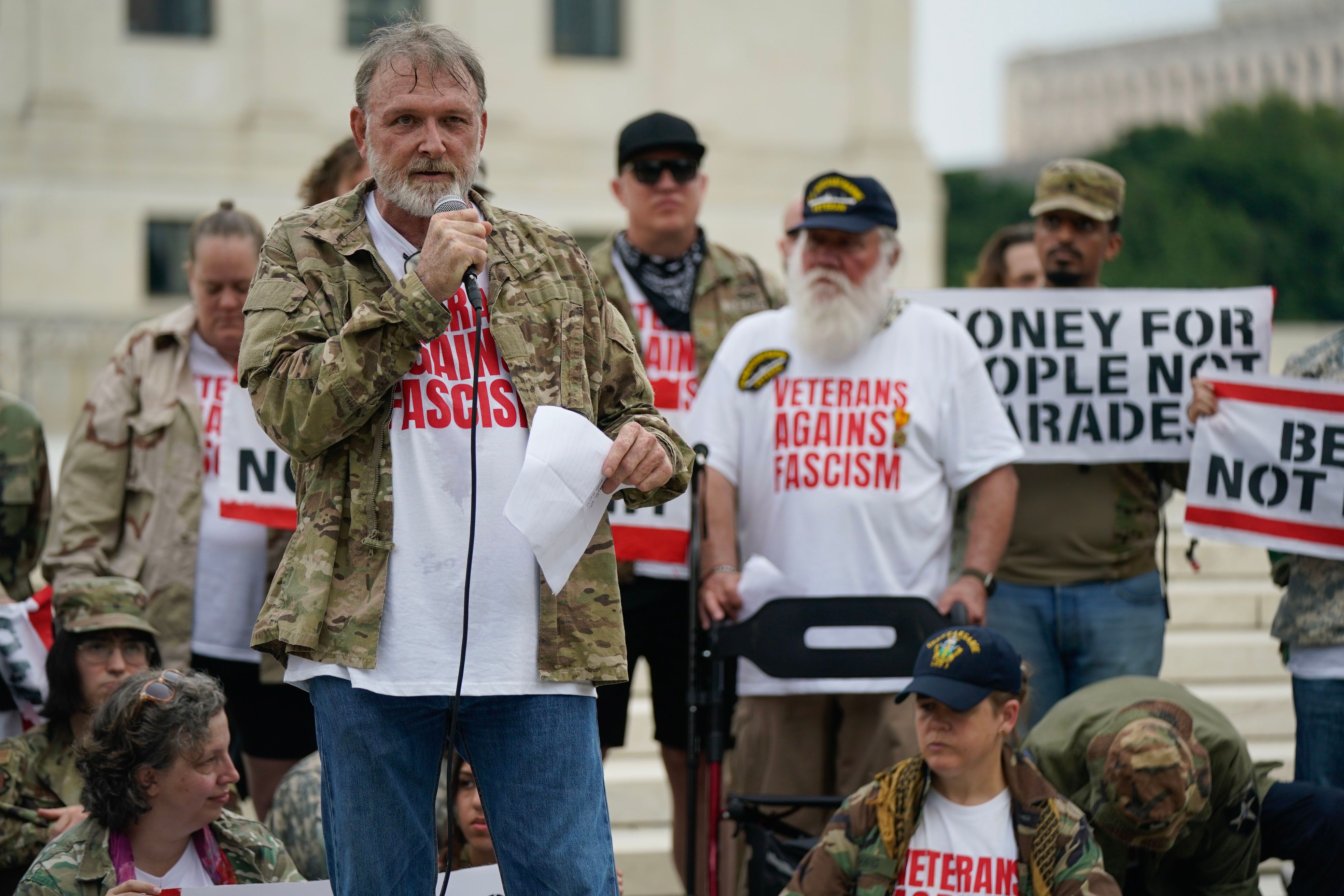
Approximately 60 veterans and military family members were arrested outside the U.S. Capitol on June 13, 2025, after breaching police barriers during a protest against a planned military parade, the deployment of troops to respond to anti-ICE protests, and cuts to veterans' services, with demonstrators including an elderly Vietnam veteran who used a walker.

User avatar
Curated by
graywolf78
1 min read
Published
45 minutes ago
The moment an 80yr old veteran gets arrested for protesting ...
reddit.com
The moment an 80yr...
Veterans Protest and Arrests
New York Post on X: "About 60 people arrested after veterans ...
x.com
New York Post on...

The demonstration on June 13, 2025, began peacefully at the Supreme Court before escalating when approximately 60 protesters pushed through bike rack barriers established by Capitol Police.12 All arrestees were charged with unlawful demonstration and crossing a police line, while some faced additional charges of assault on a police officer and resisting arrest.34 Two protesters required hospitalization following the incident, including a Vietnam veteran who used a walker and was among those detained.56

The protest occurred on the eve of a controversial $45 million military parade celebrating the 250th anniversary of the U.S. Army, coinciding with President Trump's 79th birthday.78 Demonstrators voiced opposition to recent deployments of National Guard and active-duty Marines in Los Angeles responding to anti-ICE protests, with many wearing military fatigues or shirts reading "Veterans Against Fascism" while carrying banners calling for military removal from city streets.19

choicereviews.org favicon
20 sources
Protest Organizers and Demands
Veterans Arrested on Capitol Grounds on Eve of DC Parade ...
newsweek.com
Veterans Arrested...

The demonstration was organized by veterans' advocacy groups including About Face: Veterans Against the War and Veterans For Peace, with participants calling for investment in veterans' care rather than military displays. Brittany Ramos DeBarros, Army combat veteran and Organizing Director of About Face, articulated the protesters' central message: "We want a future where we invest in care for veterans, in health care, and in education, not where we spend $50 million on a parade."12 Michael T. McPhearson of Veterans For Peace emphasized their commitment to speaking out, stating, "We are the actual people who put uniforms on because we believe in the freedoms this country is supposed to be about and we will not be intimidated into silence."3

  • Protesters demanded redirection of taxpayer money toward housing, healthcare, and food instead of military parades

  • The groups criticized recent cuts to the Department of Veterans Affairs as harmful to those who served

  • Many demonstrators indicated this protest might be the first of several actions planned for the weekend

  • Their banners and signs called for removing military from city streets and investing in community services

choicereviews.org favicon
20 sources
Trump's Veteran Record
Marlow Stern on X: "Donald Trump's five draft deferments ...
x.com
Marlow Stern on X:...

Critics of the military parade highlighted Trump's record on veterans' issues, particularly focusing on his administration's cuts to the Department of Veterans Affairs and termination of critical support programs. Chris Purdy, an Army National Guard veteran, specifically mentioned the end of the Veterans Affairs Servicing Purchase program that had kept thousands of veterans in their homes, stating "there's no regard for veterans from this Administration."12

Progressive veterans' organizations like VoteVets issued statements warning that reducing VA resources would lead to longer wait times, worse care, and potentially more veteran fatalities. Many protesters viewed the $45 million parade as a political spectacle that stood in "stark contrast" to addressing veterans' actual needs, with some describing the administration's actions as a betrayal of those who served.34

choicereviews.org favicon
20 sources
Bone Spurs Controversy
Trump on Vietnam: Despite deferments, he'd have been ...
washingtonpost.com
Trump on Vietnam:...

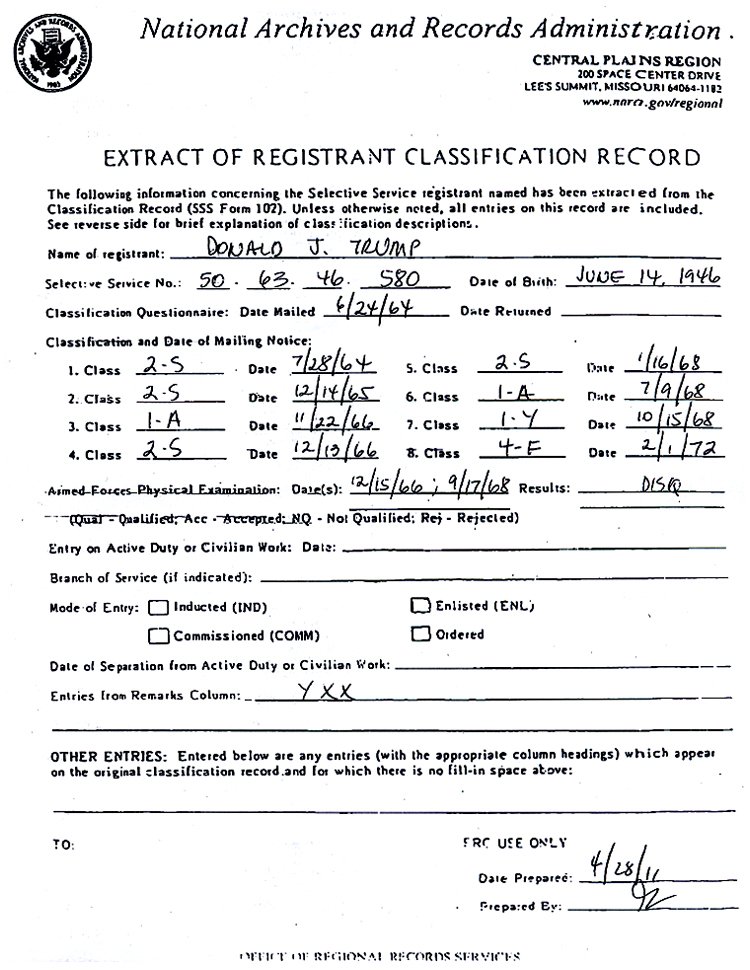
Trump's military service avoidance through a bone spurs diagnosis during the Vietnam War became a focal point of criticism during the veterans' protests. The diagnosis, reportedly provided as a favor to Trump's father by a Queens podiatrist who was his tenant, resulted in Trump's fifth draft deferment after four college-related exemptions. Inconsistencies in Trump's accounts—including his inability to recall which foot was affected and the absence of medical records—have fueled skepticism about the legitimacy of this medical exemption.

Former Trump attorney Michael Cohen's congressional testimony revealed that Trump allegedly admitted to fabricating the injury, stating "I wasn't going to Vietnam" and instructing Cohen to deflect questions about the deferment. This controversy has persistently undermined Trump's credibility on veterans' issues, with critics including the late Senator John McCain referencing it when questioning Trump's understanding of military sacrifice and service.

choicereviews.org favicon
20 sources
Veterans' Response to Trump's Service Record

Many veterans at the protest expressed frustration with what they viewed as hypocrisy in Trump's military parade celebration given his personal history with military service. Former Senator Bob Kerrey, a Vietnam veteran, publicly demanded that Trump show proof of his bone spurs, challenging the president to release X-rays that would verify the medical condition that kept him from serving.1 This sentiment was echoed by numerous protesters, with several veterans wearing shirts referencing bone spurs alongside slogans like "I served while you deferred."

The timing of the protest—occurring while Trump was actually visiting Vietnam for diplomatic meetings—was noted by several demonstrators as particularly ironic given Cohen's testimony that Trump once said, "You think I'm stupid, I'm not going to Vietnam."2 Many veterans contrasted their own service experiences with Trump's 2019 statement to Piers Morgan that he "would've been honored" to serve in Vietnam despite avoiding the draft.3 This perceived contradiction between Trump's words and actions has become a rallying point for veteran activists who question his understanding of military sacrifice while implementing policies they believe harm those who did serve.

nytimes.com favicon
cnn.com favicon
militarytimes.com favicon
8 sources
Veterans' Political Mobilization Efforts
What to know about 'No Kings' protests against Trump's ...
latimes.com

Veterans across the nation have organized a coordinated political response beyond the Capitol protests, with over 1,800 "No Kings" demonstrations planned across all 50 states on June 14, 2025.1 This nationwide mobilization represents a continuation of veterans' long history of political activism, following a major rally on June 6th at the National Mall where thousands gathered to protest Trump administration cuts to the Department of Veterans Affairs and federal workforce reductions that disproportionately affect veterans.23

  • Veterans make up only 6.1% of the U.S. population but represent 24% of federal workers facing potential layoffs2

  • The June 6th "Unite for Veterans, Unite for America Rally" focused on defending benefits, jobs, and dignity for veterans3

  • Protests in Atlanta featured veterans chanting "No kings in America!" while criticizing the $50 million military parade as a misallocation of resources4

  • Kristin Crowe of the Indivisible Georgia Coalition summarized the fundamental message: "In America, we do not have kings or thrones; the authority lies with the people"4

cnn.com favicon

  While You Pay the Price, Congress Plays Politics and War Your future is being liquidated. Every time you fill your gas tank, see your reti...