Approximately 60 veterans and military family members were arrested outside the U.S. Capitol on June 13, 2025, after breaching police barriers during a protest against a planned military parade, the deployment of troops to respond to anti-ICE protests, and cuts to veterans' services, with demonstrators including an elderly Vietnam veteran who used a walker.


The demonstration on June 13, 2025, began peacefully at the Supreme Court before escalating when approximately 60 protesters pushed through bike rack barriers established by Capitol Police.12 All arrestees were charged with unlawful demonstration and crossing a police line, while some faced additional charges of assault on a police officer and resisting arrest.34 Two protesters required hospitalization following the incident, including a Vietnam veteran who used a walker and was among those detained.56
The protest occurred on the eve of a controversial $45 million military parade celebrating the 250th anniversary of the U.S. Army, coinciding with President Trump's 79th birthday.78 Demonstrators voiced opposition to recent deployments of National Guard and active-duty Marines in Los Angeles responding to anti-ICE protests, with many wearing military fatigues or shirts reading "Veterans Against Fascism" while carrying banners calling for military removal from city streets.19
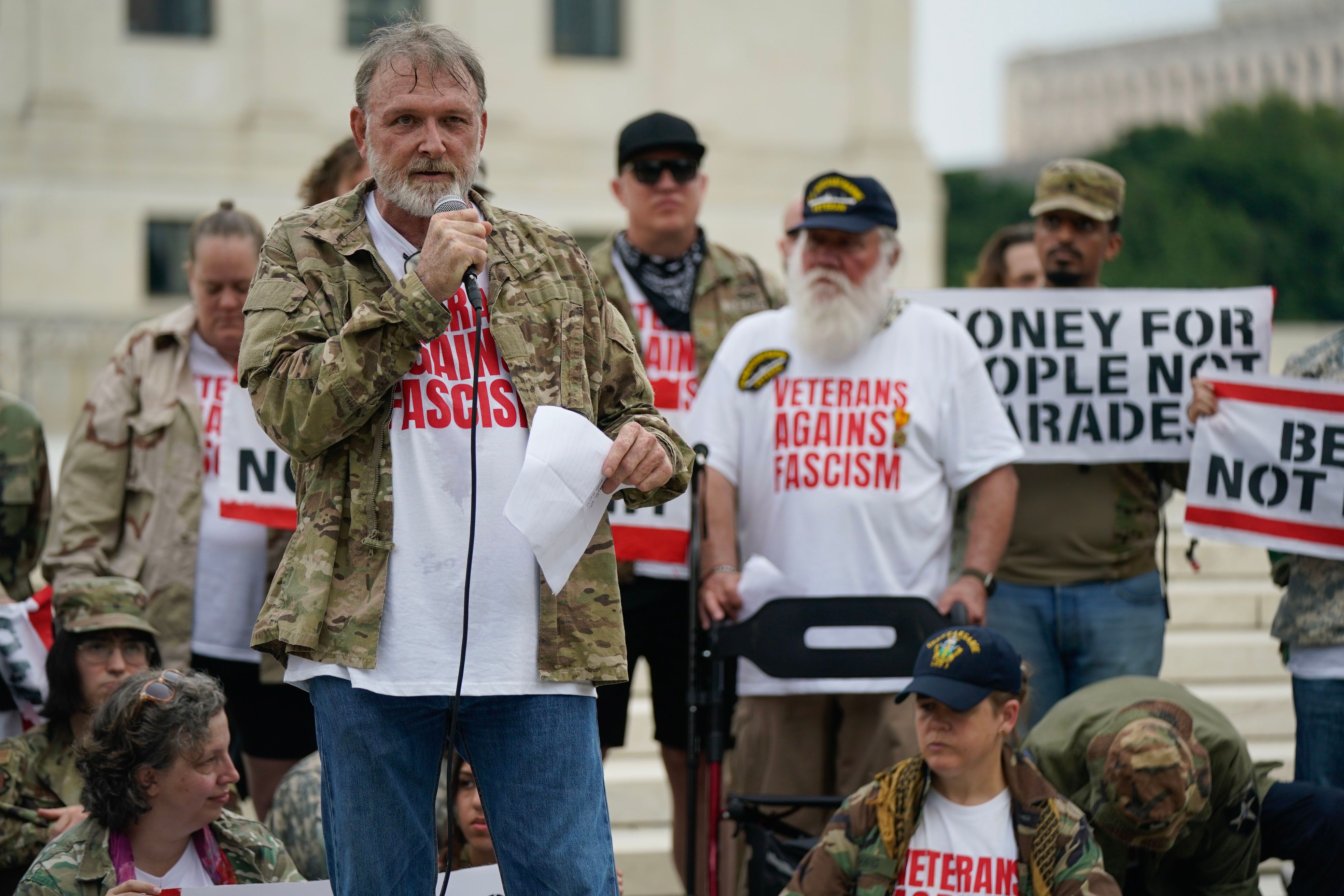
The demonstration was organized by veterans' advocacy groups including About Face: Veterans Against the War and Veterans For Peace, with participants calling for investment in veterans' care rather than military displays. Brittany Ramos DeBarros, Army combat veteran and Organizing Director of About Face, articulated the protesters' central message: "We want a future where we invest in care for veterans, in health care, and in education, not where we spend $50 million on a parade."12 Michael T. McPhearson of Veterans For Peace emphasized their commitment to speaking out, stating, "We are the actual people who put uniforms on because we believe in the freedoms this country is supposed to be about and we will not be intimidated into silence."3
Protesters demanded redirection of taxpayer money toward housing, healthcare, and food instead of military parades
The groups criticized recent cuts to the Department of Veterans Affairs as harmful to those who served
Many demonstrators indicated this protest might be the first of several actions planned for the weekend
Their banners and signs called for removing military from city streets and investing in community services
Critics of the military parade highlighted Trump's record on veterans' issues, particularly focusing on his administration's cuts to the Department of Veterans Affairs and termination of critical support programs. Chris Purdy, an Army National Guard veteran, specifically mentioned the end of the Veterans Affairs Servicing Purchase program that had kept thousands of veterans in their homes, stating "there's no regard for veterans from this Administration."12
Progressive veterans' organizations like VoteVets issued statements warning that reducing VA resources would lead to longer wait times, worse care, and potentially more veteran fatalities. Many protesters viewed the $45 million parade as a political spectacle that stood in "stark contrast" to addressing veterans' actual needs, with some describing the administration's actions as a betrayal of those who served.34

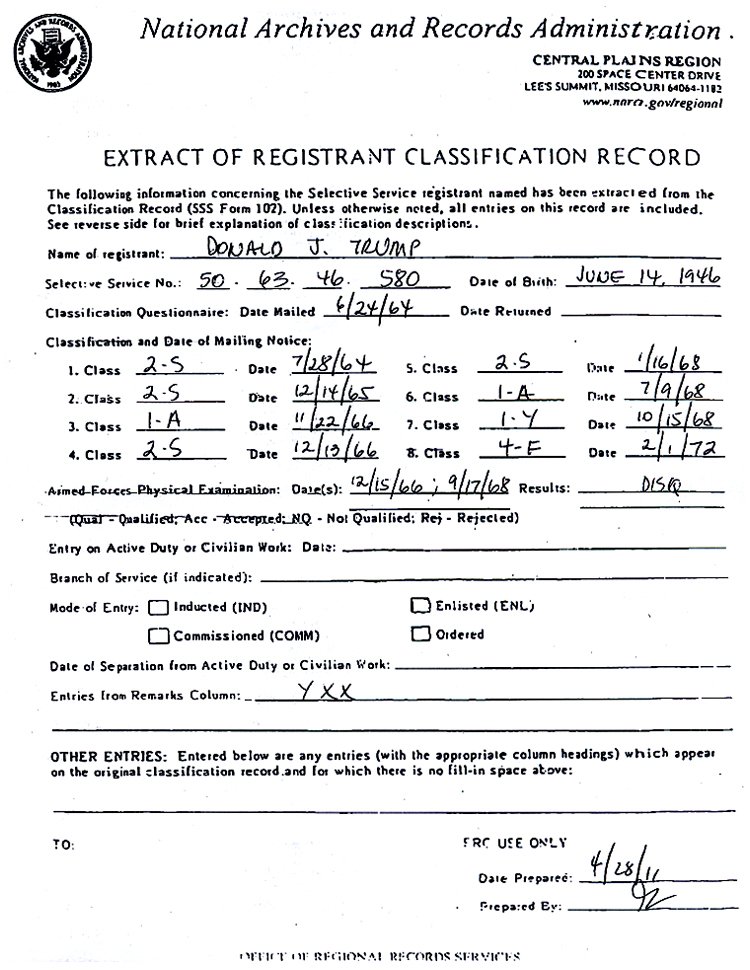
Trump's military service avoidance through a bone spurs diagnosis during the Vietnam War became a focal point of criticism during the veterans' protests. The diagnosis, reportedly provided as a favor to Trump's father by a Queens podiatrist who was his tenant, resulted in Trump's fifth draft deferment after four college-related exemptions. Inconsistencies in Trump's accounts—including his inability to recall which foot was affected and the absence of medical records—have fueled skepticism about the legitimacy of this medical exemption.
Former Trump attorney Michael Cohen's congressional testimony revealed that Trump allegedly admitted to fabricating the injury, stating "I wasn't going to Vietnam" and instructing Cohen to deflect questions about the deferment. This controversy has persistently undermined Trump's credibility on veterans' issues, with critics including the late Senator John McCain referencing it when questioning Trump's understanding of military sacrifice and service.
Many veterans at the protest expressed frustration with what they viewed as hypocrisy in Trump's military parade celebration given his personal history with military service. Former Senator Bob Kerrey, a Vietnam veteran, publicly demanded that Trump show proof of his bone spurs, challenging the president to release X-rays that would verify the medical condition that kept him from serving.1 This sentiment was echoed by numerous protesters, with several veterans wearing shirts referencing bone spurs alongside slogans like "I served while you deferred."
The timing of the protest—occurring while Trump was actually visiting Vietnam for diplomatic meetings—was noted by several demonstrators as particularly ironic given Cohen's testimony that Trump once said, "You think I'm stupid, I'm not going to Vietnam."2 Many veterans contrasted their own service experiences with Trump's 2019 statement to Piers Morgan that he "would've been honored" to serve in Vietnam despite avoiding the draft.3 This perceived contradiction between Trump's words and actions has become a rallying point for veteran activists who question his understanding of military sacrifice while implementing policies they believe harm those who did serve.

Veterans across the nation have organized a coordinated political response beyond the Capitol protests, with over 1,800 "No Kings" demonstrations planned across all 50 states on June 14, 2025.1 This nationwide mobilization represents a continuation of veterans' long history of political activism, following a major rally on June 6th at the National Mall where thousands gathered to protest Trump administration cuts to the Department of Veterans Affairs and federal workforce reductions that disproportionately affect veterans.23
Veterans make up only 6.1% of the U.S. population but represent 24% of federal workers facing potential layoffs2
The June 6th "Unite for Veterans, Unite for America Rally" focused on defending benefits, jobs, and dignity for veterans3
Protests in Atlanta featured veterans chanting "No kings in America!" while criticizing the $50 million military parade as a misallocation of resources4
Kristin Crowe of the Indivisible Georgia Coalition summarized the fundamental message: "In America, we do not have kings or thrones; the authority lies with the people"4

No comments:
Post a Comment